Fundamentally Awesome Journal
The Importance of Early Intervention for Children With Disabilities
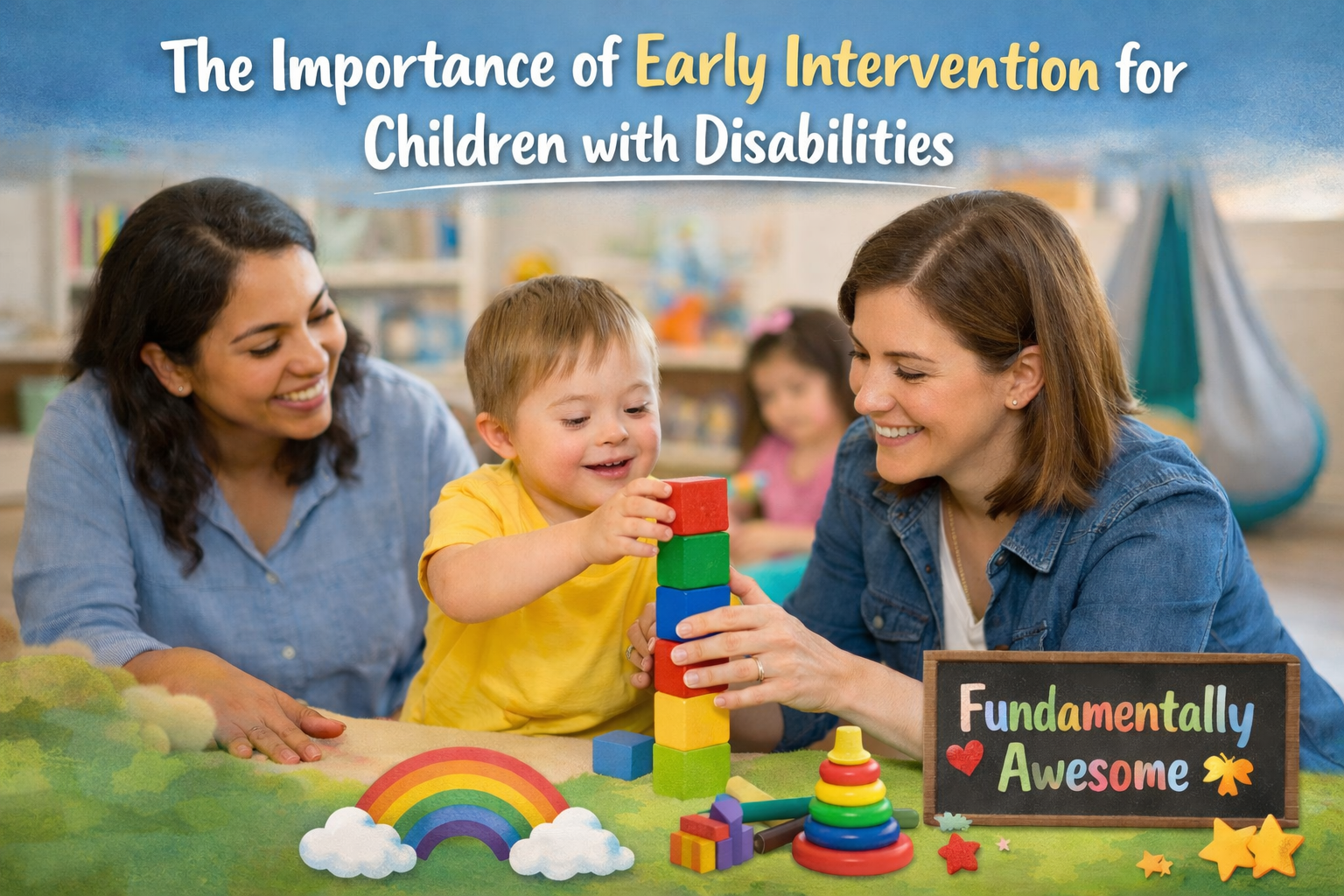
The Importance of Early Intervention for Children With Disabilities
Early intervention can change the course of a child’s life. For children with disabilities or developmental delays, support in the early years is not about labeling or limiting potential. It is about opening doors, building skills, and giving families tools to help their children thrive.
Early intervention refers to services and supports provided to infants and young children who show developmental delays or have diagnosed disabilities. These services may include speech therapy, occupational therapy, physical therapy, behavioral supports, developmental instruction, and family education. When provided early, these supports work with a child’s developing brain and body at a time when growth and learning are happening rapidly.
One of the most important benefits of early intervention is that it meets children where they are. Young children learn through play, movement, and connection. Early intervention uses these natural learning opportunities to support communication, motor skills, sensory regulation, social interaction, and emotional development. Instead of waiting for challenges to become barriers, early intervention helps address needs before frustration and gaps grow larger.
Early intervention also supports families, not just children. Receiving a diagnosis or noticing developmental differences can be overwhelming. Families often feel unsure of what steps to take or where to turn next. Early intervention provides guidance, education, and reassurance. It reminds families that they are not alone and that support exists to help them navigate systems, advocate for their child, and build confidence in their parenting journey.
Another critical benefit is access to services. Early intervention programs often serve as the gateway to long term supports such as special education services, school based accommodations, and community resources. Families who engage early are better prepared to participate in IEP meetings, understand their child’s rights, and advocate for appropriate supports as their child grows.
There is also a strong emotional impact. When children receive support early, they are more likely to experience success in communication, play, and daily routines. These successes build confidence, reduce stress, and support positive relationships within the family. For many parents, early intervention helps replace fear with hope and uncertainty with direction.
Early intervention does not mean rushing development or forcing children to meet timelines that do not fit them. It means honoring each child’s unique needs and providing support in ways that respect their individuality, sensory needs, and learning style. It is about building strengths while supporting challenges with compassion and intention.
At Fundamentally Awesome, we believe early intervention is one of the most powerful forms of inclusion. When children are supported early, families are empowered, and communities become stronger. Early intervention lays the foundation for access, dignity, and belonging not just in childhood, but throughout a person’s life.
If you have concerns about your child’s development, trust your instincts. Asking questions early can make a meaningful difference. Support is not something to wait for. It is something every child and family deserves.
Early support matters. Early connection matters. Early intervention matters.
Written by Alicea Townsend with first-hand expertise. AI tools may be used for research and drafting assistance, but all content is reviewed, verified, and published by the author.